By Professor Shane Darcy and Lydia Pastra
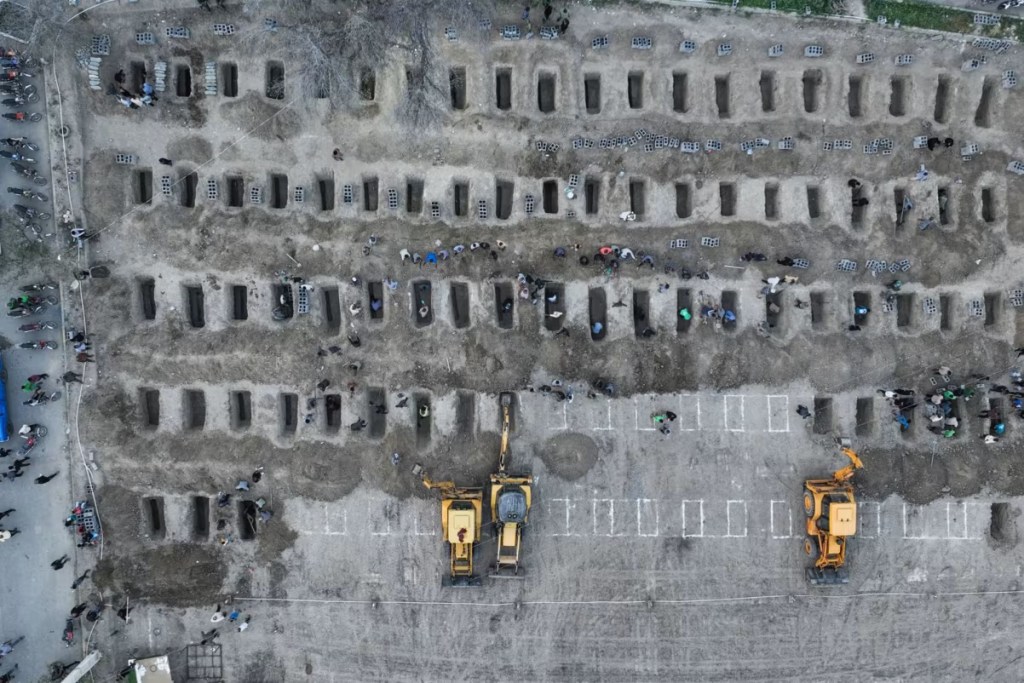
Amid the waves of attacks and the regional and global reverberations of the United States and Israel’s war of aggression against Iran, the fatal missile strikes on the Shajareh Tayyebeh primary school in Minab stand apart. The sheer human toll of the bombing by the United States is appalling, with over 160 schoolchildren and teachers killed and the lives of their families irreparably harmed. The school strike was followed by denials, obfuscations and excuses, and marked the beginning of a pattern of further attacks on places of education in Iran. Despite being protected under international humanitarian law, over 760 schools and education facilities are said to have been destroyed or damaged by the United States and Israel according to the Iranian Red Crescent Society. Some 30 university campuses have also been hit. Iran has threatened to attack United States-linked universities in the region in retaliation.
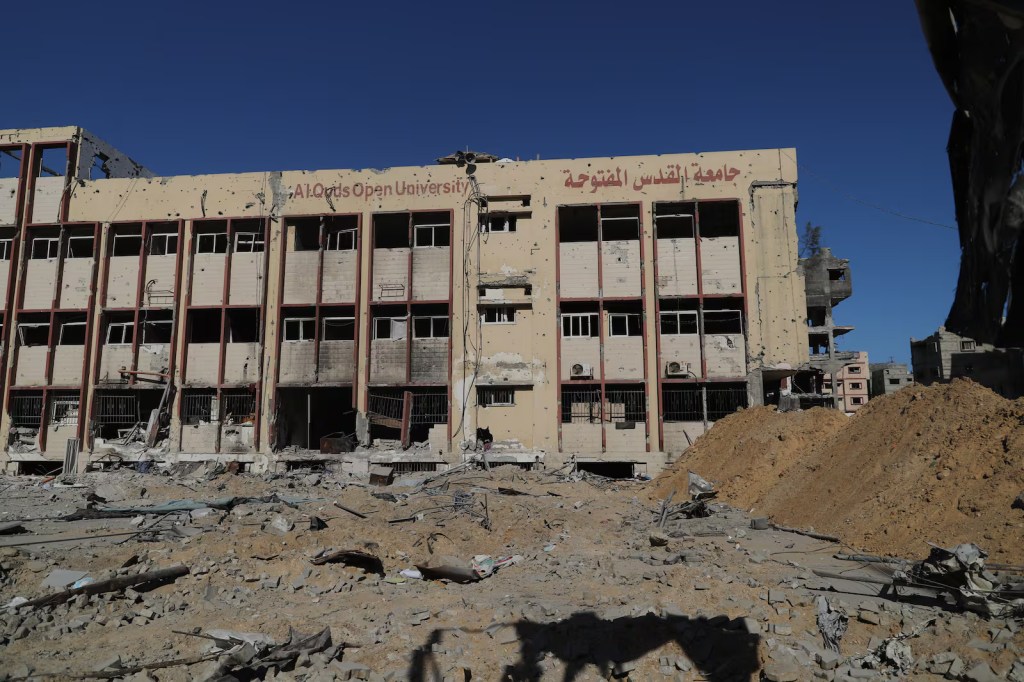
International law has long provided rules applicable during armed conflict aimed at protecting places of education as civilian objects, and schoolchildren, teachers and students as civilians. The disregard of such fundamental protections has become pronounced in recent years. Most notoriously, Israel has engaged in a widespread and systematic targeting of the education sector in Gaza in its response to the atrocities of 7 October 2023. Every university has been attacked, with some campuses having been completely destroyed. Students and academics, including professors and university presidents, have been killed in their homes, alongside their families. The actions by Israel prompted United Nations human rights experts to describe the attacks as ‘scholasticide’.
In this post, we set out key international humanitarian law rules related to the protection of education in armed conflict. We discuss how the targeting of educational institutions, both people and physical premises, can qualify as international crimes. And in a climate where impunity is trumping accountability for the gravest breaches of international law, we highlight possible courses of actions and suggested avenues of legal reform.
I. The Protection of Education under International Humanitarian Law
Education is not a casualty of war that international law has failed to anticipate, nor an issue that the United Nations has ignored. The UN Special Rapporteur on the right to education, Farida Shaheed, has affirmed that “education in armed conflict is a life-saving right and a strategic investment in peace”, recognizing it as a “core humanitarian priority”. International humanitarian law provides a framework for the protection of education in armed conflict, particularly through the special protection afforded to children and places of education. This is further reinforced by the Convention on the Rights of the Child, which obliges States to ensure respect for humanitarian law provisions applicable to children. Schools are protective environments upholding children’s rights, and their destruction during military operations may constitute a violation of the legal framework governing the conduct of hostilities.
Under international humanitarian law, schools are presumptively civilian objects. Parties to an armed conflict must at all times distinguish between civilian objects and military objectives, as well as between civilians and combatants, as provided in Article 48 of the Additional Protocol I. Articles 51 and 52 of the Protocol prohibit attacks against civilians and civilian objects, while military objectives are defined as those effectively contributing to military action whose destruction offers a definite military advantage. These principles are reflected in customary international law, notably Rules 1 and 7 of the International Committee of the Red Cross Customary IHL study. Students and school staff would retain their protected status as civilians unless and for such time as they take a “direct part in hostilities”.
A school or university remains a civilian object and cannot be attacked unless it loses its protection by making an effective contribution to military action by its nature, location, purpose or use, and its destruction offers a definite military advantage in the circumstances ruling at the time. Even where identified as a military objective, the anticipated civilian harm must not be excessive in relation to the expected military advantage. The principles of proportionality and feasible precautions in attack, as reflected in Additional Protocol I and customary international law, require parties to verify targets, choose means and methods that minimize civilian harm, cancel or suspend attacks when excessive harm becomes apparent, and give effective advance warning of attacks where circumstances permit – obligations that carry particular weight in densely populated areas. Such strict limits cannot be displaced by broad invocations of military necessity. The prohibition of reprisals against civilian objects in Additional Protocol I would also apply to schools and universities (although the United States, Israel and Iran are not parties to the instrument).
International humanitarian law and international human rights law are complementary but distinct frameworks that can apply concurrently during armed conflict. Human rights law generally applies within a States party’s jurisdiction, but may extend extraterritorially in certain circumstances, including where a State exercises effective control over territory or persons, including in armed conflict, as affirmed by the European Court of Human Rights. The right to education, protected under Articles 28 and 29 of the Convention on the Rights of the Child and Article 13 of the International Covenant on Economic, Social and Cultural Rights, does not cease to apply in wartime. Where both frameworks apply simultaneously, they can reinforce rather than contradict one another, and where tensions arise, the lex specialis principle may guide which rule prevails in the specific context. The law is not silent concerning the protection in education; the challenge lies in ensuring its application and accountability for its violation.
II. International crimes
Attacks or harm to educational institutions may constitute war crimes or crimes against humanity. In Gaza, the targeting of university staff and premises can readily qualify as both, but may also be viewed as a component of the crime of genocide. In the context of Iran, a relevant issue is whether educational institutions were intentionally targeted, or damaged as a result of indiscriminate or disproportionate attacks by the United States and Israel.
With regard to war crimes, the Rome Statute of the International Criminal Court includes the war crime of “intentionally directing attacks against buildings dedicated to … education … provided they are not military objectives”. Damage or destruction of universities and other educational institutions may also qualify as the war crimes of attacking civilian objects or intentionally launching an attack causing disproportionate harm. The arrest warrants issued by the ICC against Israeli Prime Minister Benjamin Netanyahu and former Minister of Defence Yoav Gallant include the war crime of intentionally directing attacks against the civilian population of Gaza. Deliberate killing of university staff or students that are civilians could be covered by such a charge, or related offences, such as wilful killing. The Minab school strike would qualify as a war crime if carried out intentionally, although recklessness has been considered an appropriate standard.
Crimes against humanity, which comprise a series of offences entailing a widespread and systematic attack on a civilian population, do not include attacks on education, although these could be covered by crimes against humanity already codified. The crime against humanity of murder, for example, could include the unlawful killing of students and academics, as shown by case law of the International Criminal Tribunal for Rwanda. Persecution as a crime against humanity – which is included in the arrest warrants for Netanyahu and Gallant – is especially relevant to the destruction of education in Gaza. Persecution is defined by the Rome Statute as the “intentional and severe deprivation of fundamental rights contrary to international law by reason of the identity of the group or collectivity” (Article 7(2)(g)). The discriminatory grounds covered by persecution include political, racial, national, ethnic, cultural, religious and gender.. The International Criminal Tribunal for the Former Yugoslavia held that property destruction, exclusion of a protected group from education and targeting of educational institutions could constitute persecution. It stated that “destruction and wilful damage of institutions dedicated to Muslim religion or education, coupled with the requisite discriminatory intent, may amount to an act of persecution”. Given the broader context of repressive Israeli policies and practices towards the Palestinians, attacks on education could also fall under the prohibition of apartheid under international law, which also constitutes a crime against humanity under the Rome Statute.
The UN Special Rapporteur on the situation of human rights in the Palestinian territories occupied since 1967, Francesca Albanese, in her 2024 report to the Human Rights Council, stated that Israel’s actions in Gaza, including the deliberate attack on its academic institutions and the killing of intellectuals, is of relevance for determining the commission of the crime of genocide. The crime of genocide entails the commission of specific acts “with intent to destroy, in whole or in part, a national, ethnical, racial or religious group, as such” and the killing of university staff and students in Gaza could qualify as genocidal acts. The Commission of Experts established by the UN Security Council in relation to atrocities in the Former Yugoslavia considered that the killing of academics as members of the leadership of a protected group could “be a strong indication of genocide regardless of the actual numbers killed”.
Of the other acts of genocide, the attack, disruption and denial of higher education can be seen to give rise to “serious bodily or mental harm to members of the group”. United Nations Security Council Resolution 2712, adopted in November 2023, expressed a “deep concern that the disruption of access to education has a dramatic impact on children, and that conflict has lifelong effects on their physical and mental health.” Attacks on third-level education may demonstrate genocidal intent. Circumstantial evidence of genocidal intent could be drawn from the pattern and systematic nature of the targeting of universities in Gaza, including the destruction of buildings with mines and other explosives when no hostilities are occurring, and the high number of casualties among students and deliberate killing of academic staff.
III. Accountability Challenges and the practice of Western Intervention
The Minab school strike in Iran did not occur in a legal vacuum; it occurred in an accountability vacuum. The legal framework governing the conduct of hostilities and the protection of civilians is well–established, but what is absent is its consistent and impartial enforcement. The United States and Israel have been able to act with relative impunity. There are structural gaps in the application of international humanitarian law and international criminal law to situations such as Minab. As the Global Coalition to Protect Education from Attack has documented, despite the explicit prohibition and criminalization of attacks on education, “justice remains elusive for the overwhelming majority of victims, survivors, and their families as incidents are rarely investigated and prosecuted, domestically or internationally”. These enforcement voids are reinforced by political constraints, jurisdictional limits, and mechanisms that often depend on the cooperation and political will of implicated States.
This selective enforcement creates a culture of exceptionalism in which legal standards are formally universal but selectively applied. States with greater political influence are less likely to be held accountable, and when accountability efforts do arise, they frequently rely on mechanisms those same States can influence or obstruct. The Minab strike illustrates this precisely. The United States military’s own preliminary inquiry concluded that US forces were responsible for the strike due to a targeting error, yet no meaningful accountability has followed. The UN Special Rapporteur on the right to education confirmed, at the Human Rights Council’s urgent debate on 27 March, that even a targeting error engages responsibility under the principle of feasible precautions: the attack could have been avoided. Yet the question of who failed to act and why remains unanswered. It bears reinforcing that the responsibility of the United States arises for this clear and grave breach of international humanitarian law, regardless of whether individual criminal responsibility is established.
This culture of impunity is compounded by a deeply troubling contradiction at the core of Western military interventions. Western powers have historically invoked the protection of civilians and the promotion of human rights to justify military operations or regime change in non-Western States. Recent statements have framed attacks against Iran in terms of both “freedom” for the Iranian people and the need to respond to alleged “imminent threats” posed by the Iranian regime, reinforcing the longstanding pattern of interventionist rhetoric in which military coercion is portrayed as a form of liberation and necessity. The Minab strike and other attacks on civilian infrastructure expose the vacuousness of the claim that an unlawful war of aggression serves the Iranian people.
The Independent International Fact-Finding Mission on Iran has documented that United States and Israeli strikes have increasingly targeted populated areas and civilian infrastructure, inflicting disproportionate harm on civilians that intervention rhetoric claims to oppose. Such attacks may amount to crimes against humanity, according to the Fact-Finding Mission. To invoke human rights in defence of the force that destroys them is contradictory, incoherent and hollow. If education is to be treated as essential as “food, water, shelter and healthcare”, then its protection cannot be left to the rhetoric of those who use unlawful force in the name of those that are killed. The UN High Commissioner Volker Türk highlighted recently: “bombs and missiles are not the path to sustainable peace – they can only deepen the crisis”. The failures exposed by Minab do not reflect an absence of applicable legal standards but a deliberate choice to diminish their importance and a failure to enforce them equally.
* * *
The widespread attacks and harm to educational institutions are symptoms of an era where impunity increasingly trumps accountability, and where international laws and institutions are unable to sufficiently protect education during armed conflict. This pattern extends beyond Iran and Palestine to other conflicts, including Lebanon, where numerous schools have been destroyed, damaged and vandalized by Israeli forces since October 2023. The latest phase of hostilities in Lebanon has seen significant disruption to education, with hundreds of schools closed or repurposed as shelters, leaving over 250,000 students affected. Schools have also been attacked in the ongoing conflicts in Ukraine and Sudan.
While the applicable legal framework of international humanitarian law is well-established, widely accepted and legally binding, warring States have exploited its concessions to military necessity, undermined its applicability and attacked the institutions established for enforcement. Third States are oftentimes complicit, merely reminding others of their legal commitments and failing to take meaningful steps to enforce international law. International humanitarian law must be consistently applied and upheld, and those responsible for its breach held to account.
In the Iranian, Palestinian and other contexts, independent scrutiny remains essential to documenting violations, preserving evidence, and maintaining international pressure for compliance with the existing legal frameworks. The human rights machinery of the United Nations, including its Special Rapporteurs and various fact-finding bodies, must be protected, adequately resourced, and their valuable work supported and facilitated. Third States must have recourse to and ensure the effective functioning of international courts and tribunals, such as the International Criminal Court and the International Court of Justice, as important avenues of accountability and the enforcement of international law where jurisdiction exists. That the United States is sanctioning ICC judges and prosecutors, the UN special rapporteur Francesca Albanese and Palestinian human rights organisations is both utterly condemnable and an important reminder of the potential of their various roles.
In light of the current climate where education is openly and flagrantly attacked, it may be appropriate to elevate the concept of scholasticide to a recognised international crime. This might serve to reinforce existing international laws and standards, to bring closer attention to the systematic attacks on education being currently witnessed and pave the way for accountability. The term scholasticide was coined by Professor Karma Nabulsi during Israel’s 2008–2009 assault on Gaza, and has been deployed in this context recently by United Nations mechanisms, civil society organisations and scholars. United Nations human rights experts consider scholasticide to amount to “the systemic obliteration of education through the arrest, detention or killing of teachers, students and staff, and the destruction of educational infrastructure”. Scholars Against the War in Palestine have worked to formalize scholasticide as a prosecutable category of crime. Amending the Rome Statute of the International Criminal Court so as to include scholasticide as a crime against humanity should be considered, while States and civil society organisations could integrate the concept in formal submissions in ongoing proceedings before international tribunals and in appeals to UN bodies. The codification of scholasticide would not comprise a silver bullet, but would serve to encapsulate the egregiousness of the deliberate and systematic breaches of international law which the ongoing attacks on education entail.
Lydia Pastra is an LLM student in Peace Operations, Humanitarian Law and Conflict and Professor Shane Darcy is the Deputy Director at the Irish Centre for Human Rights in the School of Law at University of Galway.
Leave a Reply